


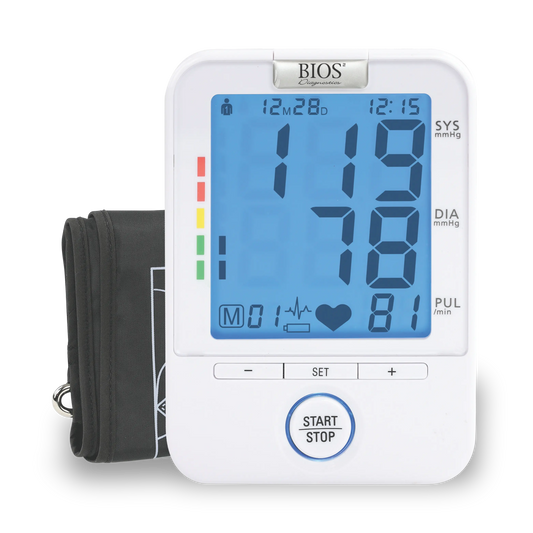
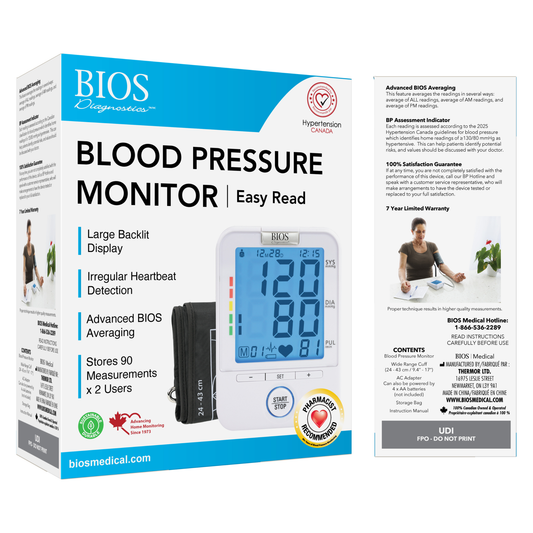

Regularly tracking your blood pressure is one of the most effective ways to manage your long-term health. However, the accuracy of your data is only as good as the equipment you use. Many people assume that if their monitor turns on and the screen lights up, the device is working perfectly. In reality, the most common point of failure isn't the machine itself: it is the cuff.
Your blood pressure monitor cuff is a consumable part of your medical kit. While the digital monitor can last for many years, the fabric, Velcro, and internal bladder of the cuff undergo significant stress every time they inflate and deflate. Knowing when to swap out your old cuff for a new one ensures your readings remain reliable and your health management stays on track.

The Hidden Culprit of Inaccurate Readings
When you use automatic blood pressure cuffs, the internal bladder must compress your brachial artery evenly to detect the oscillation of your pulse. If the cuff is compromised, the pressure distribution becomes uneven. This often leads to "phantom" high readings or frequent error messages.
An inaccurate reading is more than just a technical glitch. Seeing a high number on the screen can trigger anxiety, which in turn raises your blood pressure further, creating a cycle of stress.
With the latest Hypertension Canada guidelines setting the threshold for high blood pressure at 130/80, precision is more important than ever. A worn-out cuff that adds even a 5mmHg margin of error could be the difference between a normal report and a hypertensive diagnosis. Understanding that BP cuffs have a lifespan is the first step in maintaining a reliable home health station.

3 Major Signs Your Cuff Needs Replacement
You do not need to be a technician to spot a failing cuff. If you notice any of the following issues, it is time to look for a replacement.
1. Velcro Fatigue
This is the most common physical failure. The hook-and-loop fastener (Velcro) is designed to hold the cuff firmly against the force of the air pump. If your cuff pops open, shifts, or makes a tearing sound during inflation, it cannot apply the necessary pressure. Even a slight slip during the measurement cycle will render the reading void or artificially high.
2. Air Leaks and Pump Strain
Listen closely during your next measurement. If you hear a faint hissing sound, or if you notice the pump is running for a significantly longer time than it used to, you likely have a micro-puncture in the bladder or a leak in the tubing. Blood pressure monitor cuffs rely on airtight integrity to calculate pressure; if air is escaping, the sensors cannot provide a true value.
3. Physical Degradation and Kinks
Inspect the tubing and the connector that plugs into the monitor. Over time, the plastic can become brittle or develop kinks that obstruct airflow. Additionally, check the fabric for fraying or thinning. If the material that houses the bladder stretches out, the bladder cannot compress your arm effectively.
Compatibility and Sizing: Getting it Right
If you have determined that you need a new cuff, you must ensure the replacement is compatible with your specific device. Not all blood pressure monitor cuffs are universal.
The most critical factor is the connector (the plastic piece at the end of the tube that plugs into the machine). Different brands and models use different diameters and locking mechanisms. At BIOS Medical, we provide specific compatibility information to ensure your replacement part creates an airtight seal with your existing monitor.
Sizing is equally vital. Most BP cuffs feature a "Range Indicator" printed directly on the fabric. If your arm circumference has changed due to weight loss or muscle gain, your original cuff may no longer be appropriate. Using a cuff that is too small will result in an overestimation of blood pressure, while a cuff that is too large will provide a reading that is inaccurately low.

Extending the Life of Your BP Cuffs
While cuffs eventually wear out, you can maximize their lifespan with proper care. Many users make the mistake of tightly wrapping the cuff around the monitor for storage. This puts constant tension on the fabric and creates permanent kinks in the air tubing.
-
Store it loosely: Coil the tubing gently and store the cuff in a relaxed position.
-
Keep it clean: Use a damp cloth to wipe down the fabric, but never submerge the cuff in water, as this damages the internal bladder.
-
Check the ports: Ensure the air jack on the side of your monitor stays free of dust and debris.
Replacing a cuff is a highly cost-effective strategy. Instead of spending money on an entirely new digital system, a simple cuff replacement can restore your current device.
Choosing Quality for Long-Term Health
When it comes to medical devices, "near enough" is not good enough. Using third-party, generic cuffs can lead to compatibility issues or calibration errors. By selecting official BIOS Medical replacement parts, you are choosing components specifically engineered to work with your monitor's inflation parameters. This ensures that the data you share with your doctor is a true reflection of your cardiovascular health.
Maintaining your equipment is an essential part of being an advocate for your own wellness. A fresh cuff provides peace of mind, knowing that every number you record is accurate and actionable.
Contact BIOS Medical for Blood Pressure Cuffs and More
BIOS Medical has been a trusted name in Canadian healthcare for over three generations. We specialize in high-quality automatic blood pressure cuffs and accessories designed to meet the rigorous standards of healthcare professionals and home users alike.
If your current monitor is showing signs of wear, or if you are unsure which size is right for you, our team is here to help. We offer a comprehensive range of BP cuffs in various sizes and shapes to ensure a perfect fit for every user.
Protect the accuracy of your heart health data. Contact us today to find the right replacement cuff for your device and receive expert guidance on maintaining your home health station.
Checkout the related products here:
- https://biosmedical.com/products/replacement-cuffs-for-bd24
- https://biosmedical.com/products/wide-range-replacement-cuff
- https://biosmedical.com/products/replacement-cuffs-for-bd204
- https://biosmedical.com/products/replacement-cuff-for-3al1-3e
- https://biosmedical.com/products/replacement-cuff-for-3ms1-4y


