



Understanding your blood pressure is one of the most important steps you can take toward protecting your long-term health. Yet for many Canadians, the question remains simple: What is considered a normal blood pressure?

Blood pressure is not just a number. It is a measure of how hard your heart is working to circulate blood through your body. When those numbers fall outside a healthy range, even slightly, it can increase your risk of heart disease, stroke, and other serious conditions. Knowing what is “normal” gives you a baseline—and a reason to act when something changes.
Understanding Blood Pressure Readings
A blood pressure reading is made up of two numbers:
- Systolic Pressure (Top Number): The pressure in your arteries when your heart beats.
- Diastolic Pressure (Bottom Number): The pressure when your heart is at rest between beats.
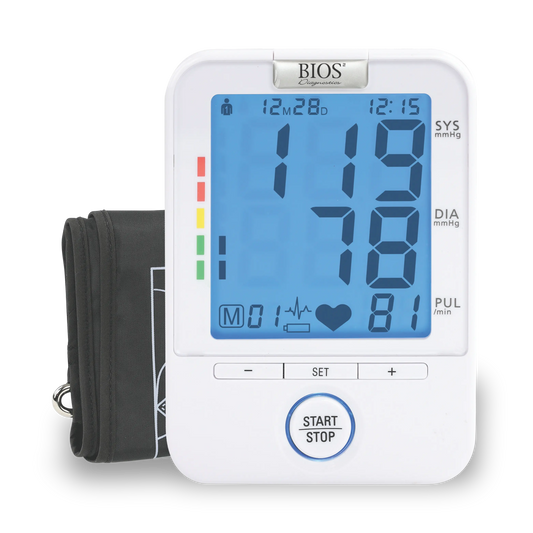
For example, a reading of 120/80 mmHg is spoken as “120 over 80.”
These two numbers work together to give a complete picture of your cardiovascular health. Looking at one without the other can lead to misunderstandings about your overall condition.
What is Considered Normal?
According to Hypertension Canada, a normal blood pressure reading is typically below 120/80 mmHg.
However, blood pressure exists on a spectrum:
- Normal: Below 120/80 mmHg
- Elevated: 120–129 systolic and below 80 diastolic
- Hypertension (High Blood Pressure): 130/80 mmHg or higher
These updated thresholds reflect a more proactive approach to health. Waiting until blood pressure becomes severely elevated is no longer considered best practice. Early awareness allows for early prevention.
Why “Normal” Is Not Always Static
It is important to understand that blood pressure is not fixed. It changes throughout the day based on:
- Physical activity
- Stress levels
- Sleep quality
- Diet (especially salt intake)
- Hydration
A single reading does not define your health. Instead, healthcare providers look for patterns over time. This is why consistent monitoring, especially at home, has become an essential part of managing cardiovascular health.
The Importance of Accurate Home Monitoring
With the rise of home blood pressure monitoring, more Canadians are taking control of their health outside of clinical settings. This shift also helps reduce the effects of “white coat hypertension,” where readings are temporarily elevated due to stress in a medical environment.
However, accuracy remains critical. A reading that is even slightly off can lead to unnecessary concern—or worse, a missed warning sign.
To ensure reliable results:
- Sit quietly for at least five minutes before measuring
- Apply the cuff directly against the skin, not over clothing
- Keep the cuff on your arm at heart level
- Avoid talking or moving during the reading
- Use a clinically validated device
These simple steps can make a significant difference in the quality of your data.
When Should You Be Concerned?
Blood pressure that consistently falls above 130/80 mmHg should not be ignored. Even if you feel well, hypertension is often referred to as a “silent condition” because it rarely presents obvious symptoms.
On the other hand, readings that are unusually low, especially if accompanied by dizziness or fatigue, may also require attention.
The key is consistency. Occasional fluctuations are normal, but patterns over time provide the clearest insight into your health.
Building a Long-Term Health Habit
Monitoring your blood pressure is not a one-time task. It should become part of your routine, much like brushing your teeth or checking the weather before leaving the house.
The more familiar you become with your numbers, the easier it is to recognize when something changes. This awareness empowers you to take action early, whether that means adjusting your lifestyle or consulting a healthcare professional.
The BIOS Medical Advantage
At BIOS Medical, we understand that accurate information begins with accurate measurement. Our home blood pressure monitors are designed to meet clinical standards while remaining simple and accessible for everyday use.
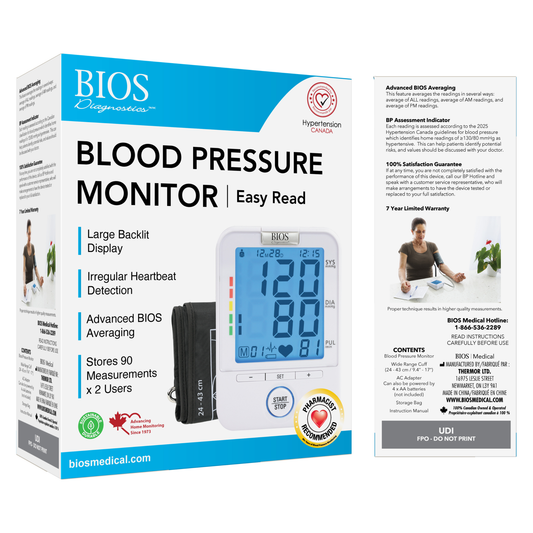
With features such as averaging technology, irregular heartbeat detection, and user-friendly displays, our devices are built to provide reliable data you can trust. When you know your numbers, you are better equipped to protect your health.
Take Control of Your Heart Health Today
Knowing what a normal blood pressure looks like is the first step. Monitoring it consistently is what makes the difference.
BIOS Medical has been trusted by Canadians for over 90 years, providing high-quality diagnostic tools that support informed health decisions. If you are ready to better understand and manage your blood pressure, we are here to help.
Checkout the related products here:
- https://biosmedical.com/products/bios-diagnostic-precision-series-10-0-blood-pressure-monitor-3ms1-4y
- https://biosmedical.com/products/bios-diagnostics-protocol%C2%AE-7d-mii-bd252
- https://biosmedical.com/products/bios-diagnostics-premium-blood-pressure-monitor
- https://biosmedical.com/products/blood-pressure-monitor-with-atrial-fibrillation-screening-bd350
- https://biosmedical.com/products/precision-series-6-0-easy-read-blood-pressure-monitor


