



La surveillance régulière de votre tension artérielle est un aspect important de votre santé globale, c'est pourquoi les tensiomètres au poignet sont si populaires. Compacts, conviviaux et conçus pour un usage quotidien, ces appareils vous permettent de suivre votre santé en toute simplicité.
Voici comment fonctionnent les tensiomètres au poignet, leurs avantages et la manière de les utiliser le plus efficacement possible.
Qu’est-ce qu’un tensiomètre au poignet et comment fonctionne-t-il?
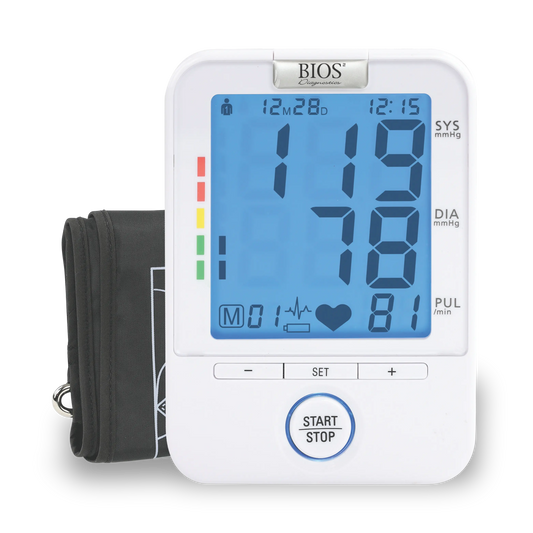
Les tensiomètres au poignet sont conçus pour mesurer la pression dans l’artère radiale, située dans le poignet. L’appareil comprend un brassard qui se gonfle automatiquement et enregistre des lectures telles que :
- La tension artérielle systolique
- La tension artérielle diastolique
- La fréquence du pouls
Ces mesures sont affichées numériquement, ce qui facilite la compréhension de vos résultats. Grâce à leur taille compacte et à leur conception légère, les tensiomètres au poignet sont idéaux pour une utilisation en déplacement, offrant une alternative aux tensiomètres traditionnels, plus encombrants.

Quels sont les avantages de l’utilisation d’un tensiomètre au poignet?
Ces appareils légers peuvent facilement se glisser dans un sac ou une pochette, ce qui les rend parfaits pour les voyages ou les lectures rapides à l’extérieur de la maison. De plus, de nombreuses personnes les trouvent plus confortables que les tensiomètres traditionnels.
Les principaux avantages sont les suivants :
● Conception compacte et portable
● Alternative confortable aux brassards pour le bras
● Positionnement facile et lectures plus rapides
● Pratique pour une utilisation à la maison et en voyage
Pour les personnes à mobilité réduite du bras, les tensiomètres au poignet constituent une option pratique et commode, car ils sont plus rapides et plus faciles à positionner.
Comment assurer la précision des lectures avec un tensiomètre au poignet?
La précision dépend d’une bonne technique. Pour de meilleurs résultats :
● Maintenez votre poignet au niveau du cœur pendant une lecture.
● Posez votre bras sur une table ou un coussin.
● Évitez de parler ou de bouger pendant les lectures, car l’appareil est très sensible aux mouvements.
● Faites plusieurs lectures et faites-en la moyenne, car les tensiomètres au poignet peuvent parfois donner des résultats variables.
Quelles sont les erreurs courantes à éviter lors de l’utilisation d’un tensiomètre au poignet?
Une erreur courante consiste à positionner le poignet en dessous du niveau du cœur, ce qui peut entraîner des lectures gonflées.
De plus, les erreurs les plus courantes sont les suivantes :
● Mesurer les lectures après l’exercice, les repas ou la caféine, car cela peut entraîner des pics temporaires.
● Porter le brassard trop lâchement ou trop serré, car un ajustement incorrect peut compromettre la précision.
Quand envisager de passer à un tensiomètre de bras?
Bien que les tensiomètres au poignet soient une option pratique, ils peuvent ne pas convenir à tout le monde. Si vous recevez fréquemment des lectures incohérentes ou inexactes, il est peut-être temps d’envisager un tensiomètre de bras. Les tensiomètres de bras sont souvent plus fiables pour les personnes souffrant de problèmes de santé spécifiques nécessitant un suivi précis. Consultez votre professionnel de la santé si vous constatez des écarts dans vos résultats, car il pourrait vous recommander un changement en fonction de vos besoins.
Comment entretenir un tensiomètre au poignet?
Pour que votre tensiomètre au poignet reste fiable, un entretien régulier est essentiel, notamment :
● Vérifiez régulièrement le brassard pour détecter les signes d’usure.
● Rangez l’appareil dans un étui de protection lorsque vous ne l’utilisez pas pour éviter de l’endommager.
● Remplacez les piles au besoin.
Magasinez chez BIOS Medical pour des tensiomètres au poignet
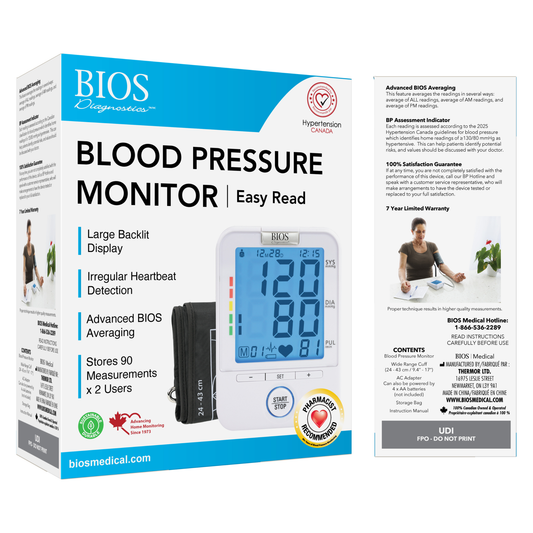
Si vous recherchez un tensiomètre au poignet fiable pour vous accompagner dans votre parcours de santé, BIOS Medical propose des options de haute qualité conçues pour répondre à vos besoins. Que vous effectuiez des mesures à la maison ou en déplacement, nos appareils allient précision, confort et commodité. Magasinez en ligne chez BIOS Medical dès aujourd’hui pour trouver le tensiomètre au poignet idéal pour vous.
FAQ
Les tensiomètres au poignet sont-ils précis?
Les tensiomètres au poignet peuvent fournir des lectures précises s’ils sont utilisés correctement. Maintenir votre poignet au niveau du cœur et rester immobile pendant la lecture sont importants pour des résultats fiables.
Les tensiomètres au poignet de BIOS sont-ils cliniquement approuvés?
Tous les tensiomètres au poignet BIOS sont approuvés par Santé Canada et sont endossés par Hypertension Canada.
Un tensiomètre au poignet est-il meilleur qu’un tensiomètre de bras?
Les tensiomètres au poignet sont plus portables et pratiques, tandis que les tensiomètres de bras sont souvent considérés comme plus fiables pour les personnes qui nécessitent un suivi très précis de la tension artérielle.
À quelle fréquence devez-vous vérifier votre tension artérielle avec un tensiomètre au poignet?
La fréquence dépend de vos besoins de santé et des recommandations de votre professionnel de la santé. De nombreuses personnes surveillent leur tension artérielle quotidiennement ou plusieurs fois par semaine.
Que faut-il éviter avant de prendre la tension artérielle avec un tensiomètre au poignet?
Évitez la caféine, l’exercice, le tabac ou les repas copieux immédiatement avant de prendre une mesure, car ceux-ci peuvent temporairement augmenter les niveaux de tension artérielle.
Les mouvements peuvent-ils affecter les lectures d’un tensiomètre au poignet?
Oui, parler, bouger ou changer la position du bras pendant une lecture peut affecter la précision, car les tensiomètres au poignet sont sensibles aux mouvements.
Découvrez les produits connexes ici :
- https://biosmedical.com/products/blood-pressure-monitor-wrist
- https://biosmedical.com/products/blood-pressure-monitor-wrist-1


